WORKPLACE - Illinois State Armory
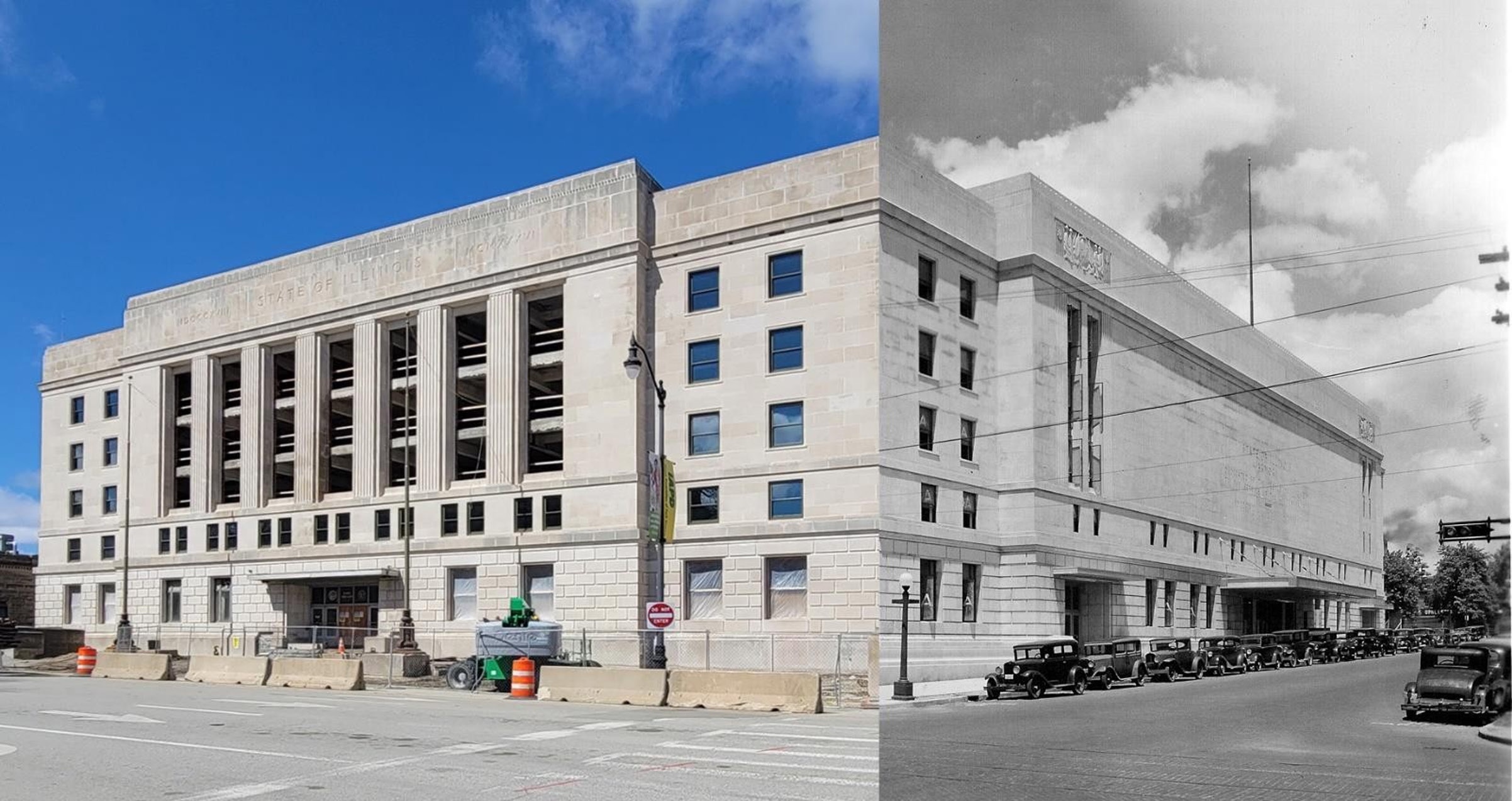
Façade : 2024 vs 1936
Tilton Kelly Bell
State of Illinois Central Management Service (CMS)
State of Illinois Capital Development Board (CDB)
In progress
Adaptive Reuse of Historical Site
LEED Silver Certification
Floor Plates Expanded from 93,327 sf to 250,000 sf
Raised Roof
Preservation of historic suites, lobbies, exterior, and a portion of the stage
Revit I BIM 360 I AutoCad Architecture I InDesign I Photoshop I Excel I Bluebeam
The Illinois State Armory overlooks Capitol Square in Springfield. Built in 1936 as a Works Progress Administration project, it served as a drill hall, convention site, sports and entertainment venue, and home to the National Guard and State Police — before sitting idle since 2010.
Its redevelopment, part of the wider Capitol Complex Masterplan, consolidates multiple agencies into one building and reduces the state's reliance on leased offices. The challenge was to meet contemporary planning guidelines and codes — and a late-stage shift toward hybrid work — while preserving a historic structure whose central auditorium had long blocked circulation.
Working with Tilton Kelly Bell, I carried the project from programming through construction documentation: restacking six floors of office space, coordinating new accessibility and life-safety interventions with the preserved fabric, and pairing salvaged materials with new finishes. Documented in Revit and AutoCAD Architecture.
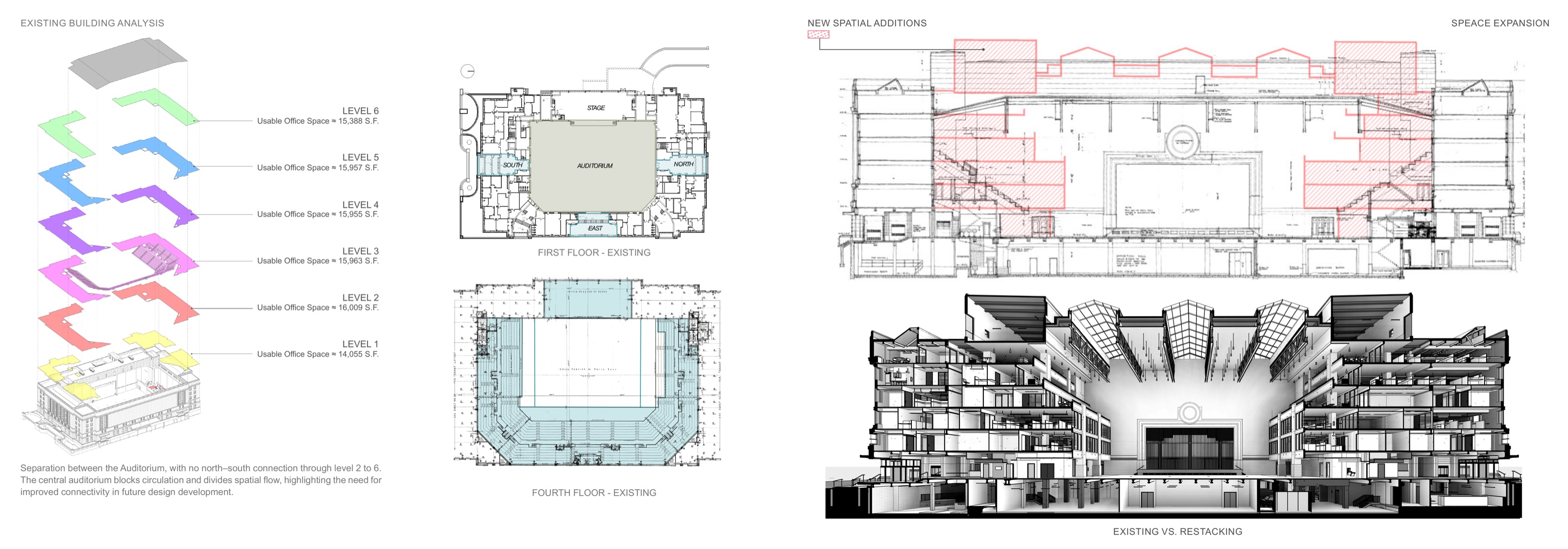
Existing building analysis — usable office space per floor (≈14,055–16,009 S.F.) with the existing first- and fourth-floor plans, where the central auditorium severs north–south circulation through levels 2–6; new spatial additions (in red) reclaim the volume, revealed in the existing-versus-restacking cutaway.
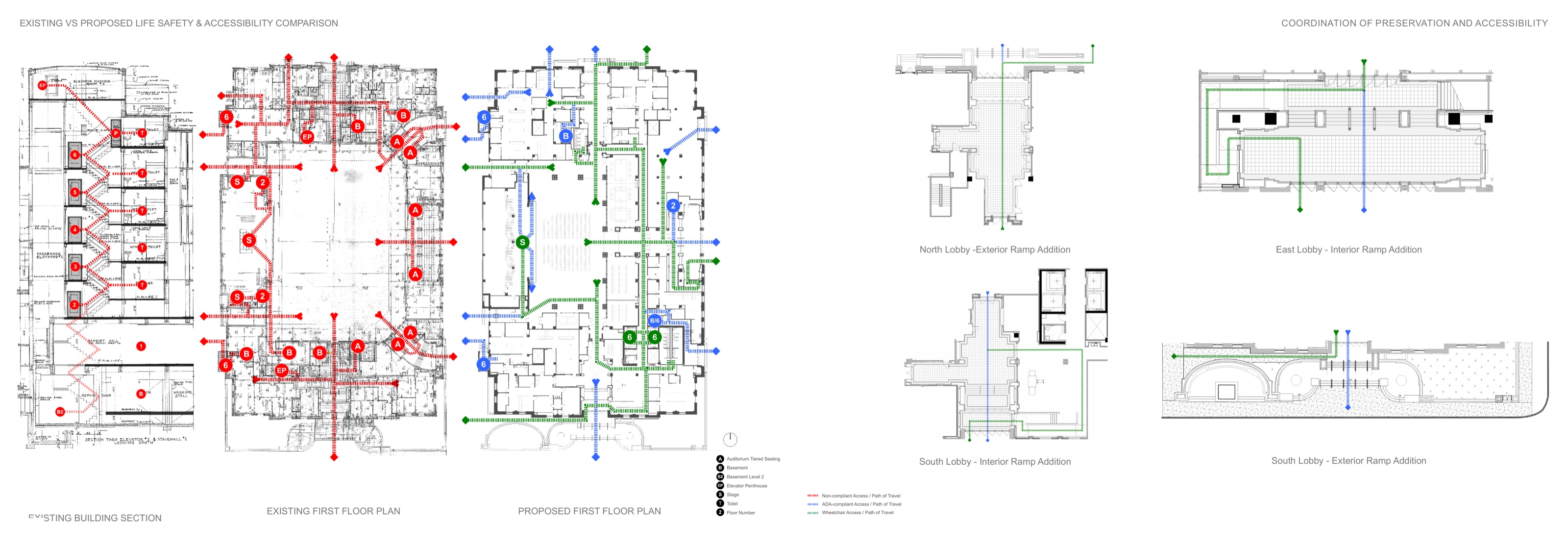
Existing versus proposed life safety & accessibility — red marks the non-compliant existing paths of travel, blue the new ADA-compliant routes, green the wheelchair paths — coordinated with preservation through new interior and exterior ramps at the north, east, and south lobbies.
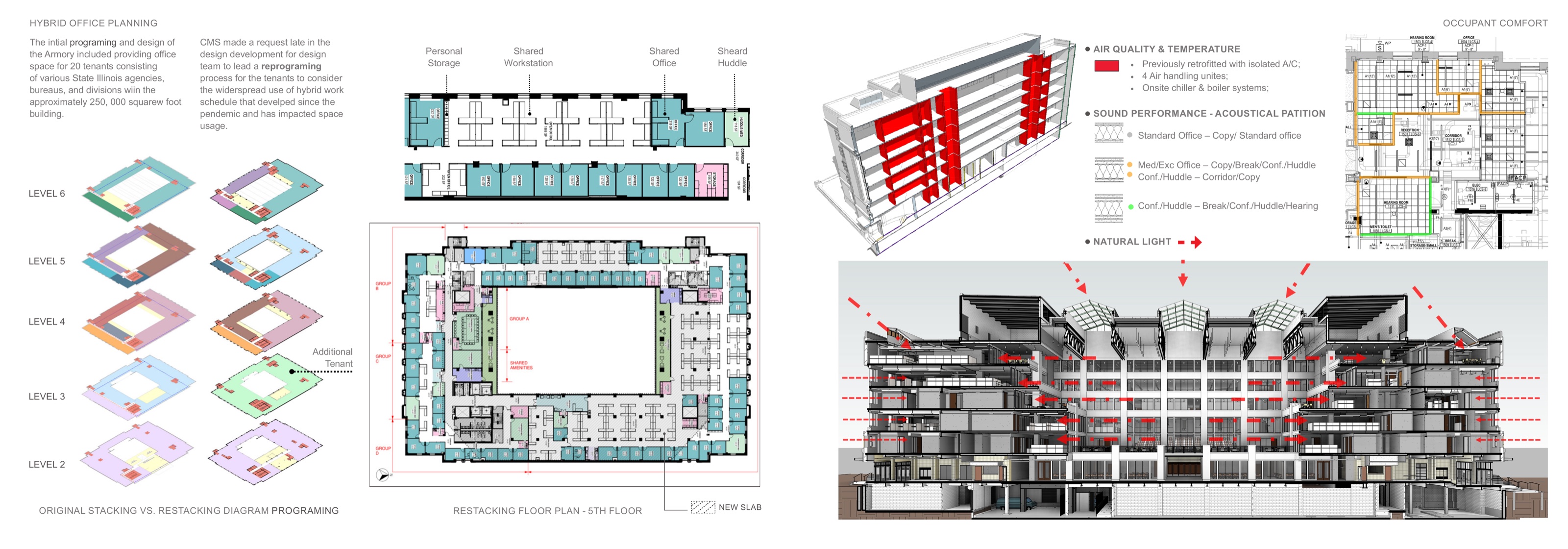
Reprogramming ≈250,000 S.F. for twenty state agencies — original versus restacked stacking, workstation types, and a representative fifth-floor plan — alongside isolated A/C with four air-handling units, acoustic partitions tuned by room type, and daylight carried deep into the section.
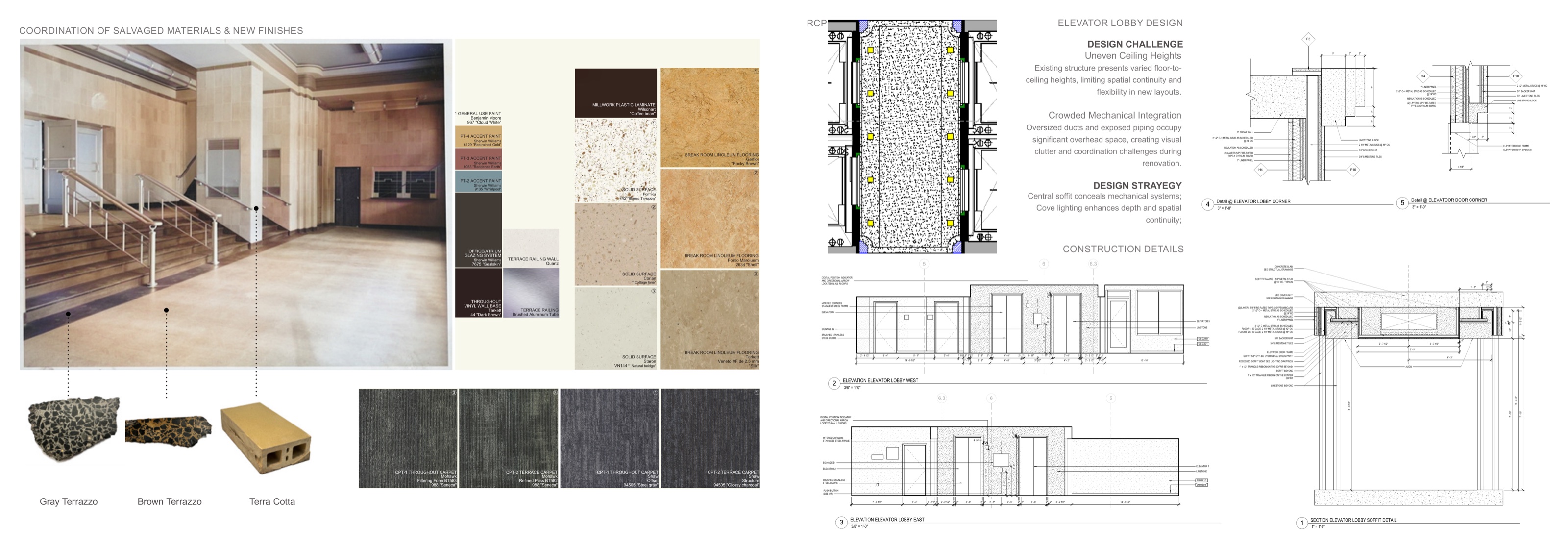
Gray and brown terrazzo and terra cotta recovered from the building, paired with new paints, linoleum, solid surface, and carpet; the elevator lobby resolves uneven ceilings and crowded mechanicals with a central soffit and cove lighting, carried into construction details.
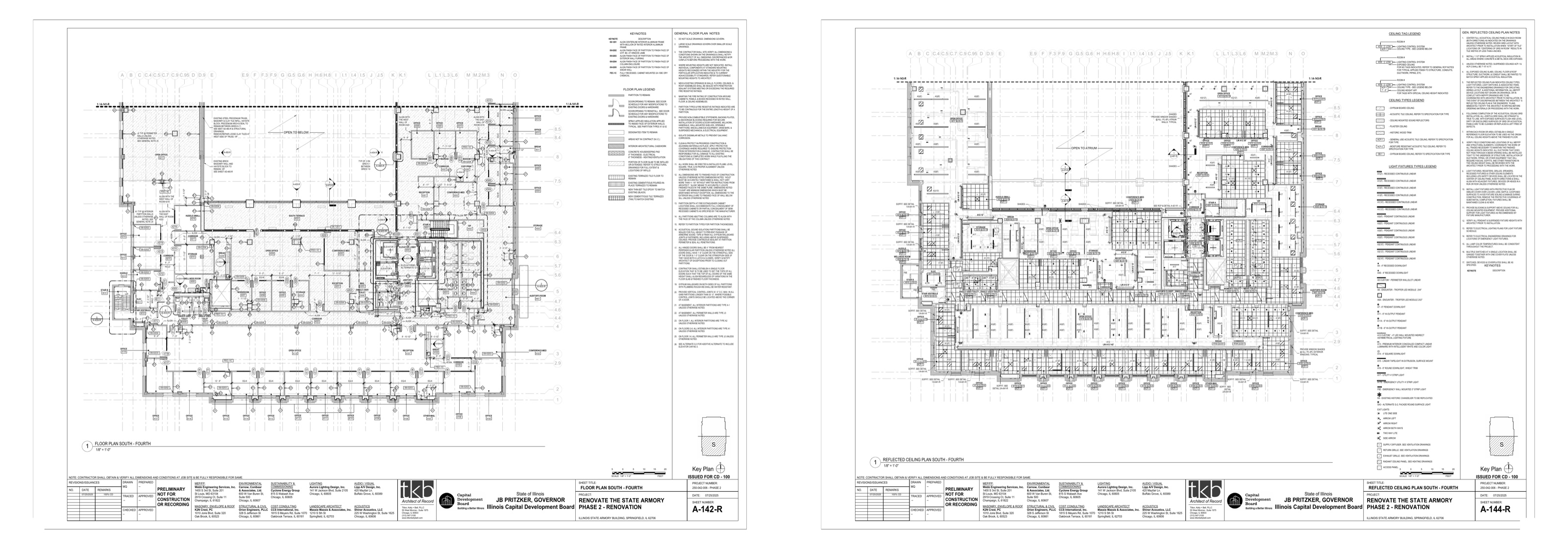
Issued for CD — Renovate the State Armory, Phase 2 renovation: fourth-floor south floor plan (A-142-R) and reflected ceiling plan (A-144-R).
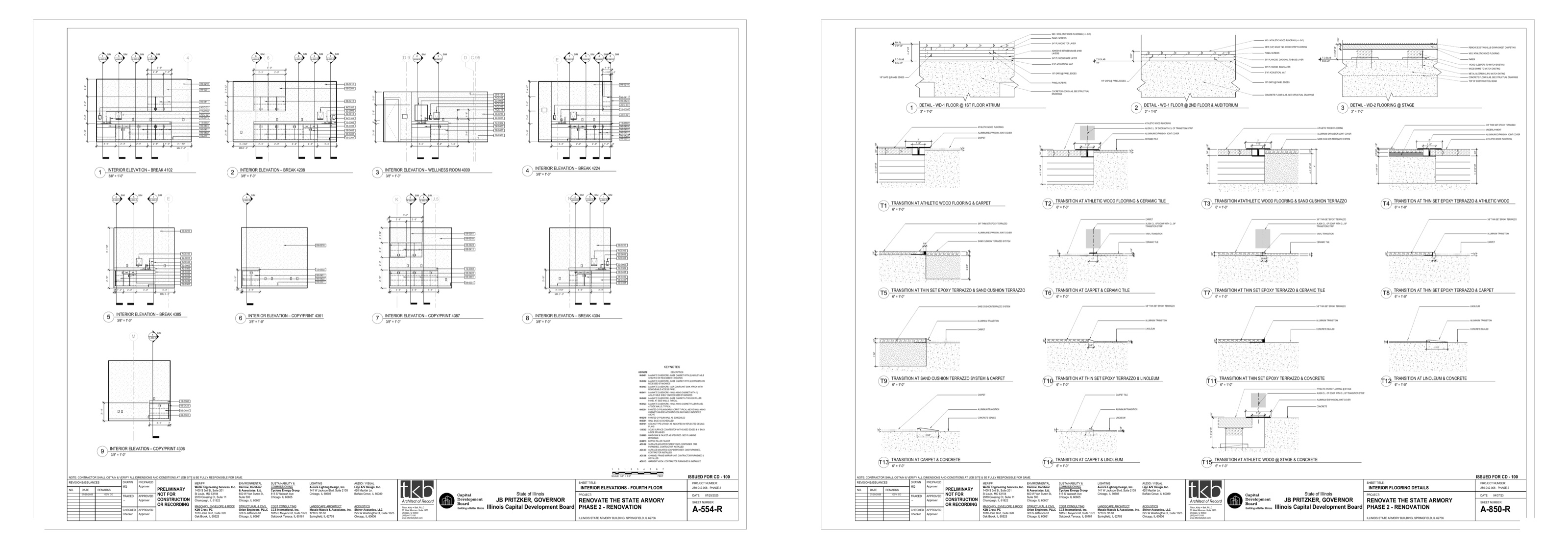
Issued for CD — fourth-floor interior elevations (A-554-R) and interior flooring details (A-850-R): break rooms, copy/print, wellness, and the full schedule of flooring transitions.